Glamsterdam is Ethereum's next network upgrade. Developers are calling it the biggest upgrade since the Merge in 2022 – when Ethereum switched from mining to staking. Glamsterdam’s main goal is to let the network handle roughly three times more transactions than it can today. That could make Ethereum cheaper to use – and change the supply and demand picture for ether (ETH).
According to the Ethereum Foundation, there's no fixed launch date for Glamsterdam yet. But the latest developer plans target late 2026. This article covers the main changes and what it all might mean for ETH investors.
What's inside the Glamsterdam upgrade
The name combines Gloas and Amsterdam – the code names for changes to the network's two layers. There should be around ten changes in total, and one main change leads each half.
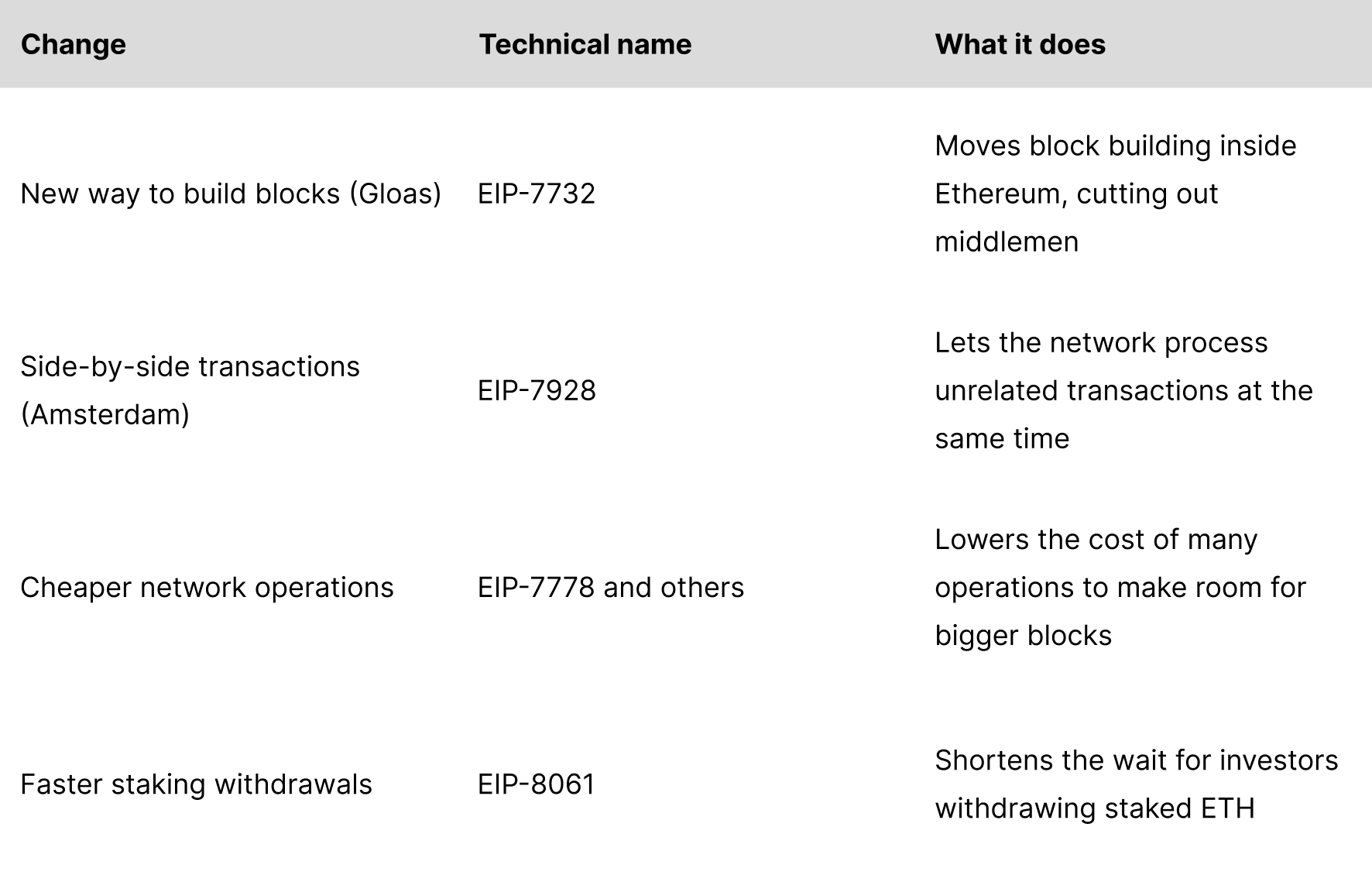
Gloas: the main change on this side is who builds Ethereum's blocks – the bundles of transactions the network records together. Validators are the computers that process transactions and secure Ethereum. But they rarely pack blocks themselves today. Instead, most outsource the job to a few professional block-building firms via middlemen called relays. Gloas would move block building inside the Ethereum protocol, cutting out those middlemen. And getting rid of middlemen is what crypto was built for. A leaner, more reliable network could strengthen the long-term case for ETH.
Amsterdam: the main change here is how Ethereum handles transactions inside each block. The network processes them one at a time today, like shoppers in a single checkout queue. Amsterdam would effectively open more tills, letting unrelated transactions run side by side. In short, it aims to make Ethereum faster.
Both changes support the upgrade's bigger goal: fitting more transactions into every block. More room per block means less competition for space, which could bring fees down when the network gets busy. Ethereum measures that space in "gas", but users pay the bill in ETH. Think of it like a household gas bill: gas measures the units used, and ETH is the money that pays the bill.
Developers aim to raise the gas limit from 60 million to 200 million per block, roughly triple today's level. Raising the limit only works if the network can handle bigger blocks. And that's what Gloas and Amsterdam prepare it for. Put simply, Glamsterdam would give Ethereum a bigger engine – one that can do more work without overheating.
The table below sums up the main changes of the Glamsterdam upgrade.
Data sourced from eips.ethereum.org on 12 August 2026
What Glamsterdam could change for ETH
Overall, we think Glamsterdam could support the ETH price long term: rising demand against a shrinking supply.
On the demand side, cheaper and faster transactions could attract more users to Ethereum. More users could mean more demand for ETH.
On the supply side, things get more complicated. Ethereum already destroys ("burns") a small slice of every transaction fee. That shrinks the ETH supply faster when the network gets busy. After Glamsterdam, two forces would pull against each other. On the one hand, cheaper fees would destroy less ETH per transaction. On the other, more transactions would mean more fees to burn. Whichever force wins determines whether the ETH supply grows or shrinks.
Our base case: the supply grows slightly at first. That's what happened after the Dencun upgrade cut fees in 2024, when the amount of ETH burned fell. But over time, we believe rising demand could turn that around – more transactions means more ETH burned, which could shrink the supply again.
Glamsterdam could also change the maths for investors who stake ETH. Staking means locking up coins to earn rewards for helping run the network. Withdrawing staked ETH can involve a long queue today, and the upgrade aims to shorten it. A faster exit would make staking less of a commitment, which could tempt more investors in. And every coin locked in staking is one less coin available to trade.
Ethereum price analysis
Our view on ETH hasn't changed much since our last technical update in July. Our bias is still for higher prices in the second half of this year.
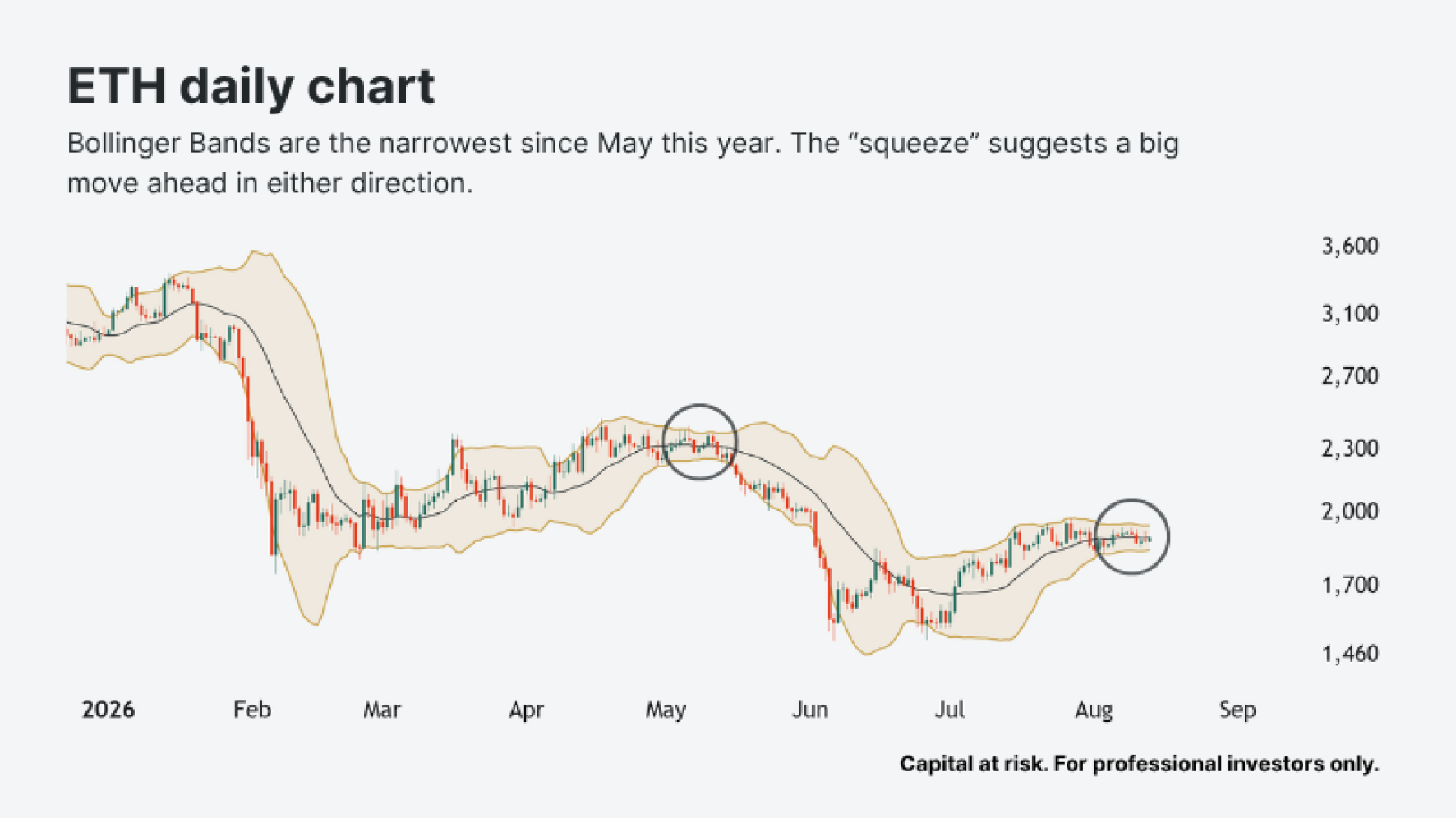
The price has spent the past month in a narrow trading range – between roughly $1,800 and $2,000 a coin. The daily Bollinger Bands (chart below) are also about as narrow as they were in early May. A squeeze this tight often ends with a bigger move, though it says nothing about the direction of that move.
TradingView | As of 13 August 2026
Glamsterdam is one catalyst investors are watching into late 2026. Past upgrades like the Merge drew heavy market attention, and perhaps Glamsterdam could do the same.
Leverage Shares offers 3X long and short Ethereum ETPs. Capital at risk.
Key takeaways
- Glamsterdam is Ethereum's biggest upgrade since the Merge, changing how the network builds blocks and processes transactions.
- The upgrade could make Ethereum cheaper to use, which may affect both the demand for ETH and its supply.
- Our bias for ETH stays higher into year-end, though upgrades alone don't guarantee a stronger price.