The ETH/BTC ratio tracks how ether (ETH) performs against bitcoin (BTC) – not in dollars, but head-to-head. Traders watch it because it can show changes in crypto risk appetite and capital rotation that dollar charts might miss. This guide covers what the ratio is, what drives it, and how some investors use it.
What is the ETH/BTC ratio and how does it work?
The ETH/BTC ratio is the price of one ether divided by the price of one bitcoin. For example, if ETH trades at $2,000 and BTC trades at $65,000, the ratio is about 0.031. That means one ETH would buy you roughly 3.1% of one BTC. A rising ratio means ETH is gaining value versus BTC, while a falling ratio means BTC is gaining ground. You can find the ratio on most charting platforms by searching “ETHBTC”.
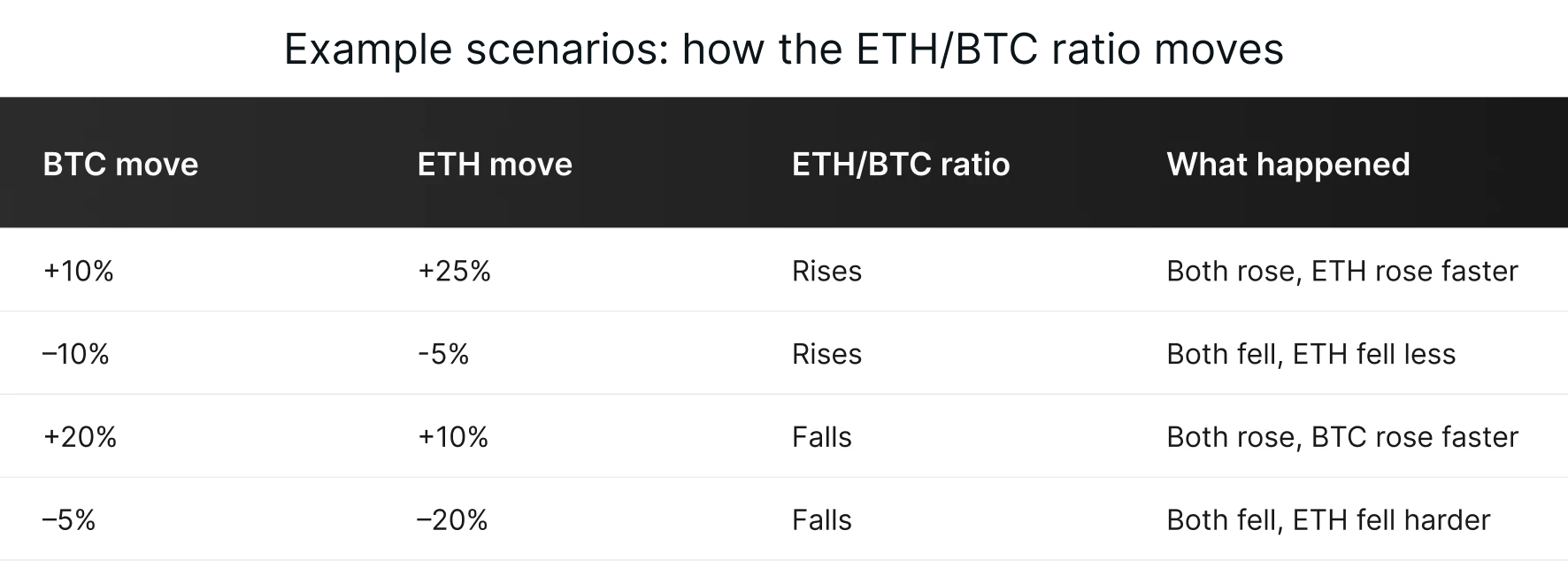
The ratio strips out the dollar direction of crypto – it only tracks how BTC and ETH perform against each other. Both assets can rise, fall, or move in opposite directions – the ratio just shows which moved more. The table below gives a few examples:
What drives the ETH/BTC ratio?
Bitcoin and Ethereum have different purposes. Those differences can drive separate demand cycles – and move the ETH/BTC ratio. The table below shows some key differences between the two.
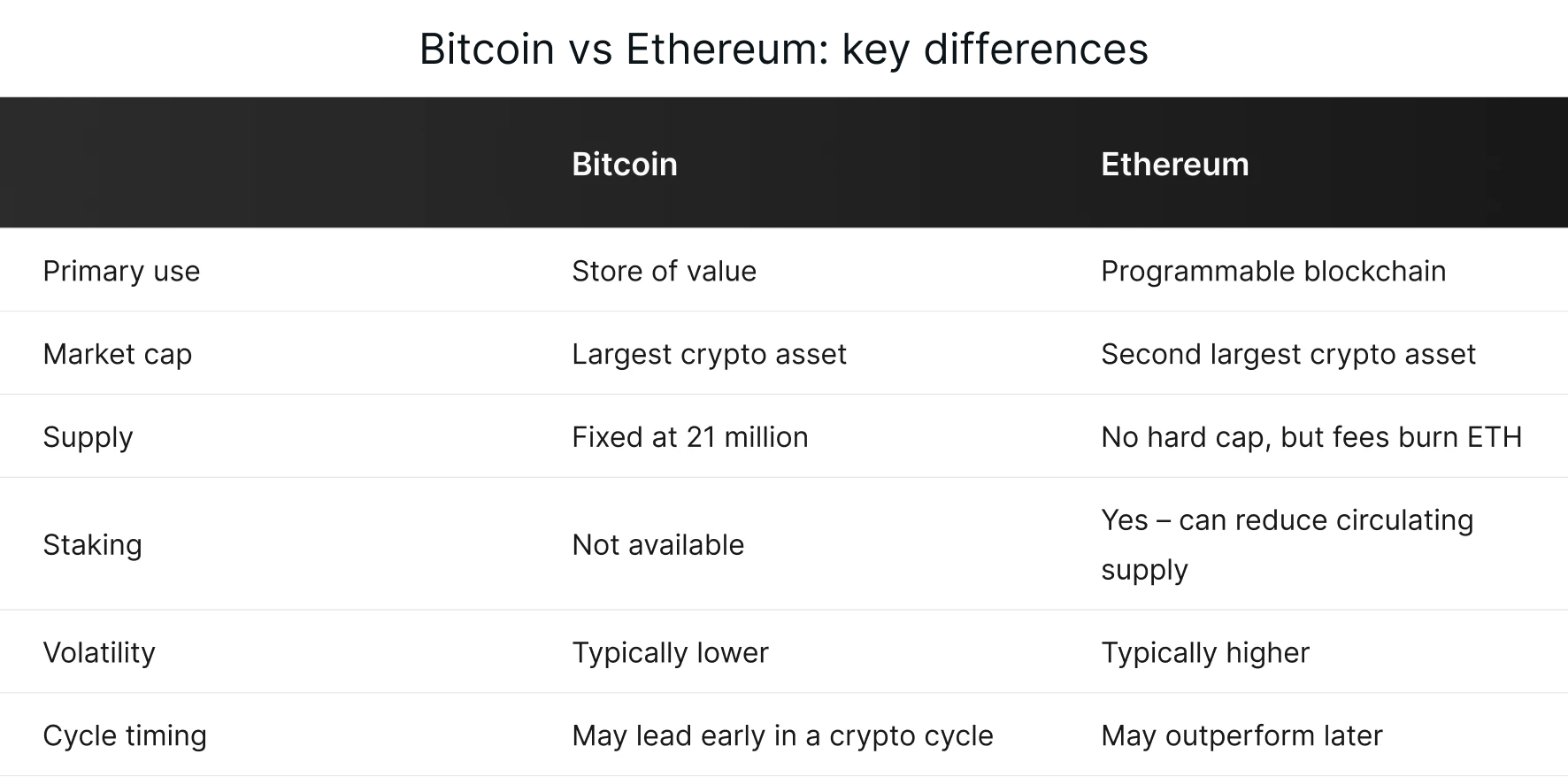
Bitcoin is primarily a store of value. Its fixed supply of 21 million coins and simple monetary policy may attract investors looking for scarcity and a potential hedge against currency debasement. It often tends to lead in the early stages of a crypto rally, when institutional money enters first.
Ethereum is a programmable blockchain. It powers decentralized finance (DeFi), NFTs, stablecoins, and thousands of applications. Its demand depends on network usage, developer activity, and staking yields – not just scarcity. ETH has historically outperformed later in the cycle, when investors move further along the risk curve.
The chart below shows how these rotations have played out in the past.
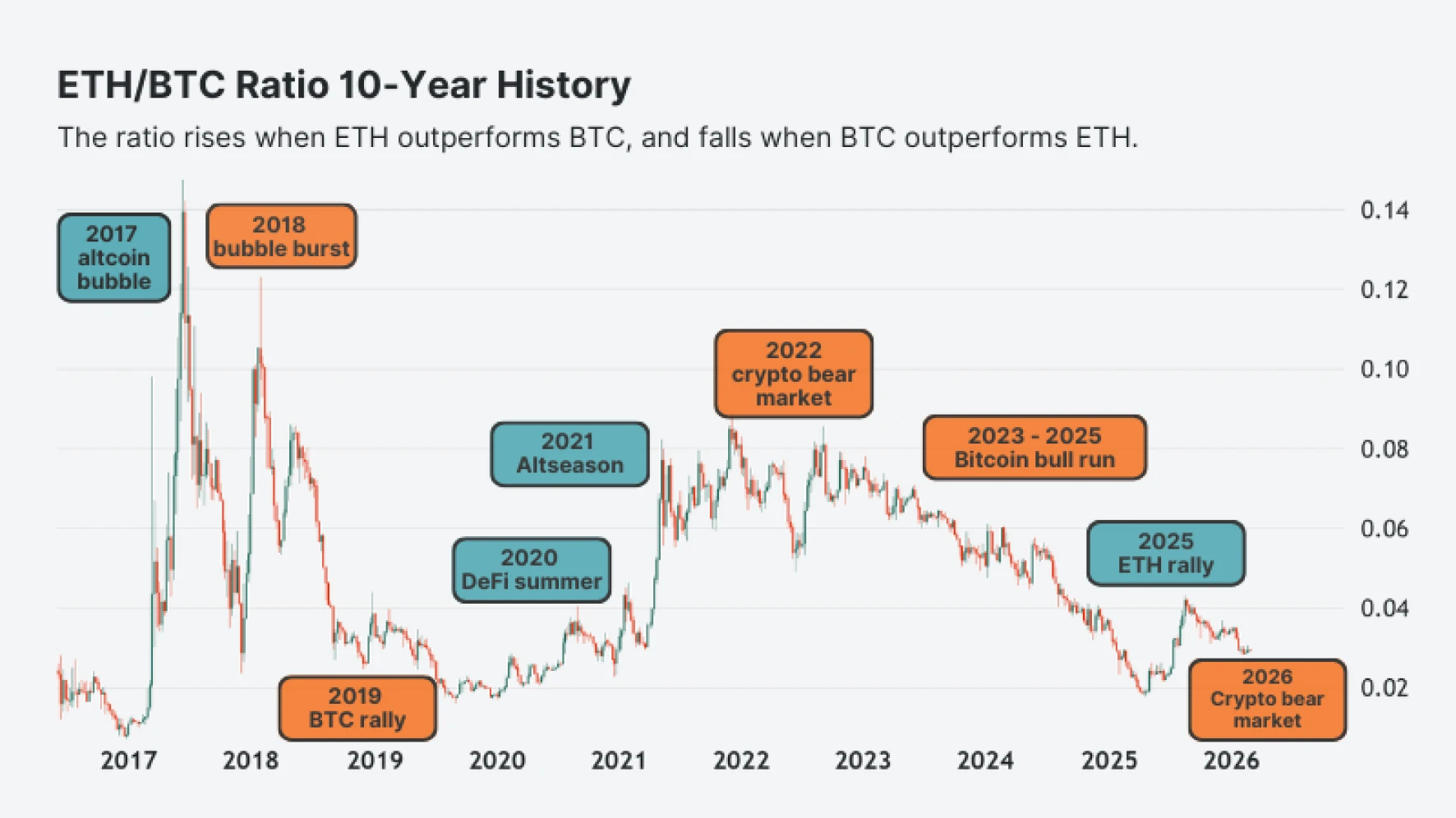
Source: TradingView | As of 3 March, 2026
ETF flows can change the ratio, too. If spot BTC ETFs pull in more money than ETH ETFs, the ratio may fall. ETH staking takes supply out of circulation, which can tighten the market relative to BTC. And major Ethereum upgrades have pushed the ratio higher in the past – when investors bought ETH on the back of them.
How some investors and traders use the ETH/BTC ratio
Some investors use the ratio to time rotation between BTC and ETH. Instead of picking a direction for crypto, they focus on which asset could outperform the other.
That’s called a relative value trade. For example, an investor who expects ETH to outperform BTC might go long ETH and short BTC at the same time. The trade could profit if ETH gains relative to BTC – regardless of where the overall market goes in dollars.
Leveraged ETPs can offer a way to express this kind of view on a daily basis. For example, a trader might buy a 3X long Ethereum ETP and a 3X short Bitcoin ETP for the same session. Because they reset daily, returns over longer periods can differ from the stated multiple.
Leverage Shares offers 3X long and short ETPs for both Bitcoin and Ethereum, allowing investors to gain amplified exposure to daily moves in a regulated wrapper.
Key takeaways
The ETH/BTC ratio tracks how ETH performs against BTC, removing the dollar direction of the market. A rising ratio can show a growing crypto risk appetite. A falling ratio can show capital moving into BTC.
BTC and ETH have different use cases, supply models, and investor profiles. These differences drive separate demand cycles that move the ratio over time.
Some investors use the ratio for relative value trades between BTC and ETH. Leveraged ETPs can express these views on a daily basis, but they reset daily and suit short-term trading.